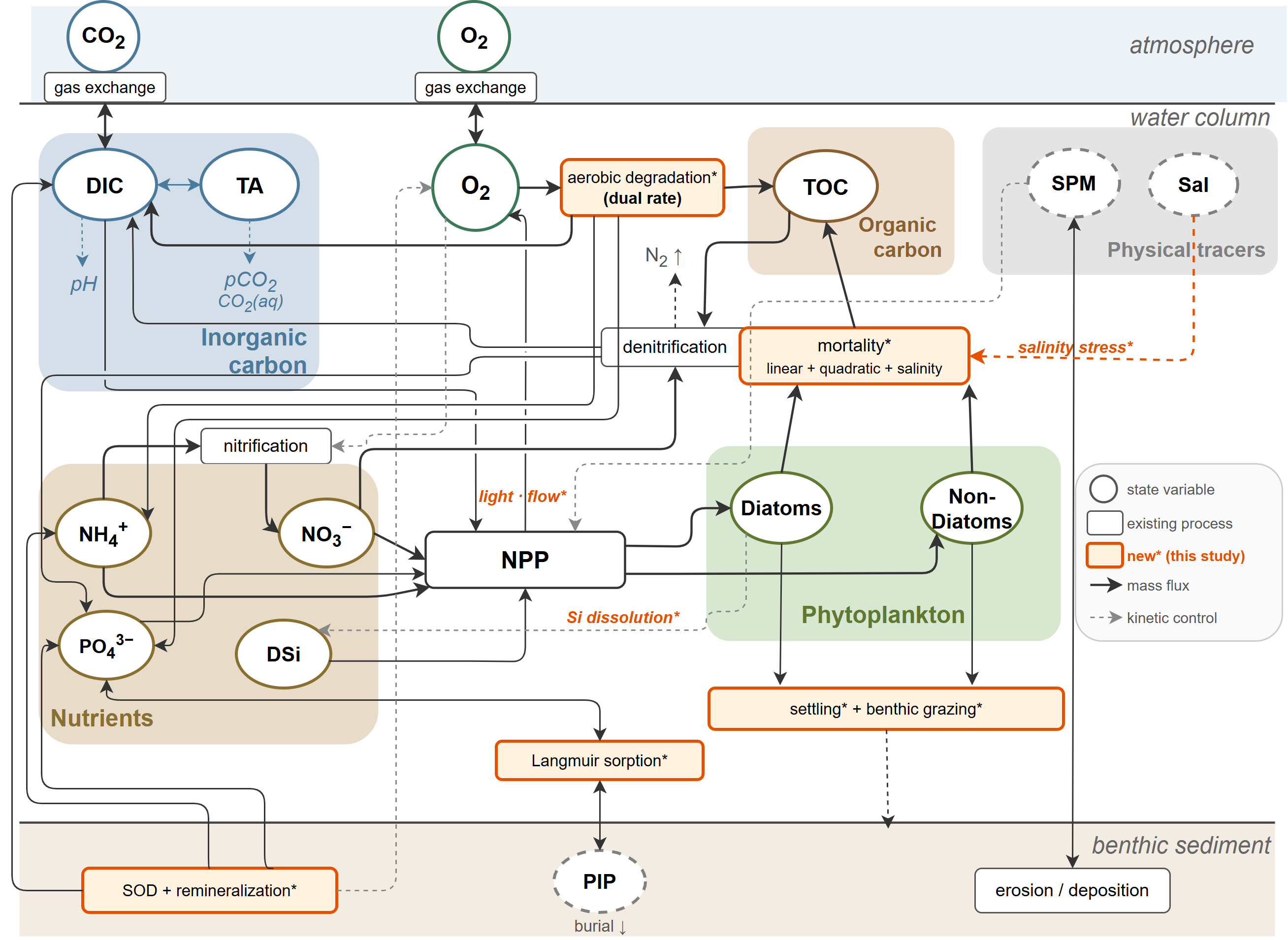
The proximate controls on phytoplankton blooms and carbon dynamics were investigated in the eutrophic, wastewater-impacted Saigon River Estuary (Ho Chi Minh City, Vietnam) using a transient 1D reactive-transport model (C-GEM) evaluated against 24 months of monitoring data. The study reveals that seasonal algal blooms are controlled primarily by monsoonal swings in hydraulic residence time rather than by nutrient delivery, with a transition threshold (critical residence time of ~28–37 days; Damköhler number Da ≈ 1) separating bloom-suppressed wet-season conditions from bloom-permissive dry-season regimes. Concurrently, persistent heterotrophic respiration of urban organic waste drives extreme pCO2 supersaturation (>10,000 µatm) and an estuarine CO2 evasion of 143.7 ± 12.3 Gg C/yr.

Tropical estuaries and mangroves in the global carbon cycle