Blue carbon

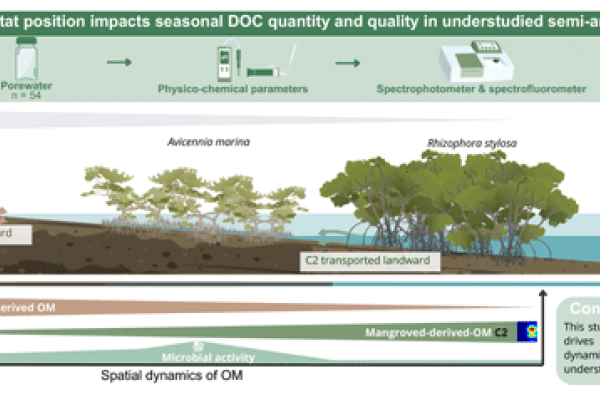
New TROPECOS paper in Biogeosciences : Seasonal dynamics of dissolved organic matter along an intertidal gradient in semi-arid mangrove soils (New Caledonia) by Mouras et al.

DOM quantity and quality were investigated in semi-arid mangroves with no external organic matter input, developing along an intertidal gradient: a salt-flat, an Avicennia marina stand, and a Rhizophora stylosa stand. Soil and porewater samples were collected during both wet and dry seasons, and analysed for physicochemical parameters, total and dissolved organic carbon (TOC, DOC), chromophoric and fluorescent dissolved organic matter (CDOM, FDOM), and mineralogical composition.

Field work in Marapanim and Salinopolis, Brazil

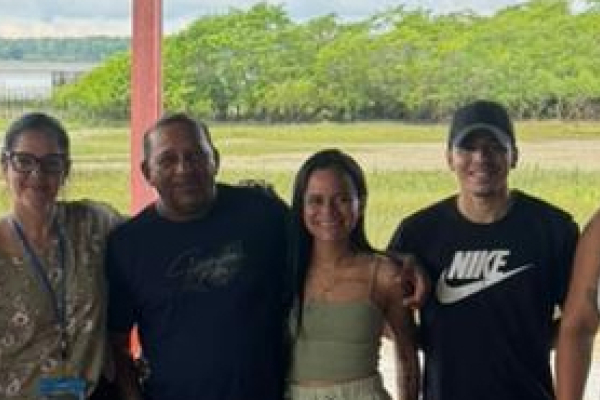
In June 2026, TROPECOS scientists from BOREA, iEES, UFF, MPEG and UFPA have sampled sediments cores, litters and litter bags in two Amazonian mangroves, Marapanim a preserved site and Salinopolis a site impacted by urbanization and sewage loads. In addition, forest inventories were performed in Marapanim.  

Field work in mangroves of Mamangua and Itacoatiara, Rio de Janeiro, Brazil

The second TROPECOS field work in mangroves of Rio de Janeiro (Mamangua and Itacoatiara) 24 May 2025 – 7 June 2025, involved 14 TROPECOS research scientists and students from BOREA, LPG, UFF and UFPA. We measured gas fluxes in mangrove soils and waters, dissolved carbon concentrations and water current in tidal creeks, and high resolution dissolved redox species in sediments using 2D gels. 


Second Field work in mangroves of Marapanim and Salinas, Pará, Brazil

The second TROPECOS field work in mangroves of Pará (Marapanim and Salinas) 6 May 2025 - 28 May 2025, involved 11 TROPECOS research scientists and students from BOREA, LPG, MPEG, UFF and UFPA. We measured gas fluxes in mangrove soils and waters, dissolved carbon concentrations and water current in tidal creeks, and high resolution dissolved redox species in sediments using 2D gels. 

Field work in Ouvéa, New Caledonia

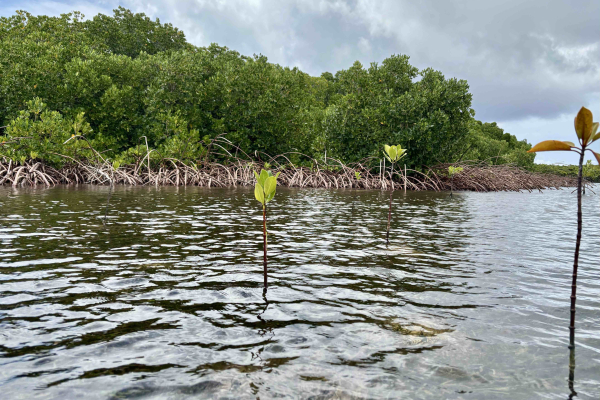
This TROPECOS fieldwork in the mangroves of Ouvéa involved a team of six scientists, including a researcher, two PhD students, a post-doc, a researcher technician and an intern from University of New Caledonia.

The week-long mission was made possible through the agreement of the landowners from the Téouta tribe and the hospitality of the women’s association in the Téouta tribe (FAI DOHU association).