Soils and sediments

New TROPECOS paper in Environmental Science and Pollution Research: "Mangrove sediments as carbon sinks: a global analysis of research patterns, trends and future directions" by Cavalcante et al.
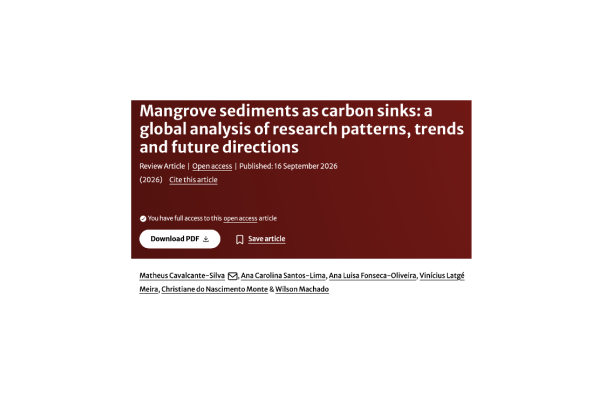
Mangrove sediments are widely recognized as an important component of long-term carbon storage in coastal ecosystems. However, the structure, evolution, and thematic organization of the scientific literature addressing mangrove sediment carbon have not yet been clearly characterized at the global scale. This study addresses this gap by providing a scientometric analysis of the literature on mangrove sediments as carbon sinks.
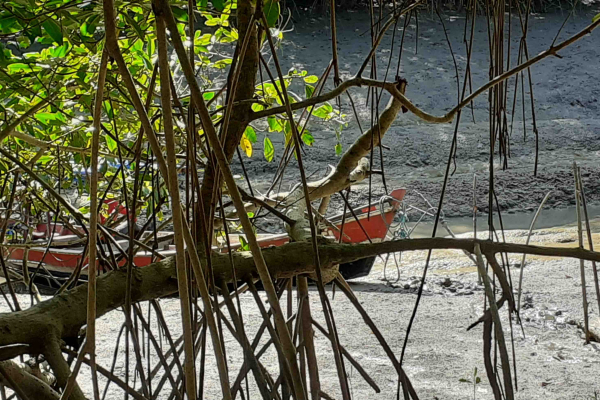
New field work in Marapanim, Pará, Brazil

The third TROPECOS field work in mangroves of Marapanim Pará (19 Sep. 2025 – 3 Oct. 2025, involved 7 research scientists and students from BOREA, MPEG, UFF and UFPA. We measured gas fluxes in mangrove soils and waters, dissolved carbon concentrations and tidal exchanges, isotopic composition of dissolved inorganic carbon and methane, and litter fall. A world record of tidal variation of pCO2 in a mangrove tidal creek was obtained during equinox spring tides, with values lower than 900 ppmv at high tide and higher than 9 000 ppmv at low tide.  

Field work in mangroves of Mamangua and Itacoatiara, Rio de Janeiro, Brazil

The second TROPECOS field work in mangroves of Rio de Janeiro (Mamangua and Itacoatiara) 24 May 2025 – 7 June 2025, involved 14 TROPECOS research scientists and students from BOREA, LPG, UFF and UFPA. We measured gas fluxes in mangrove soils and waters, dissolved carbon concentrations and water current in tidal creeks, and high resolution dissolved redox species in sediments using 2D gels. 


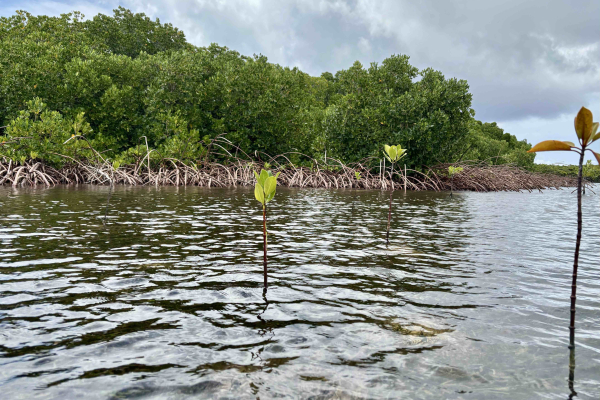
Field work in Ouvéa, New Caledonia

This TROPECOS fieldwork in the mangroves of Ouvéa involved a team of six scientists, including a researcher, two PhD students, a post-doc, a researcher technician and an intern from University of New Caledonia.

The week-long mission was made possible through the agreement of the landowners from the Téouta tribe and the hospitality of the women’s association in the Téouta tribe (FAI DOHU association).