Dissolved gas analysis

New TROPECOS paper in Journal of Geophysical Research "Methane and nitrous oxide reshape the air‐water greenhouse gas budget of a tropical estuarine delta"
Estuaries exchange greenhouse gases with the atmosphere and can either potentially warm or cool the climate. Most studies focus on CO2, but other gases such as CH4 and N2O can also be important. In several tropical deltas, mixing between river water and sea water can lower CO2 levels, leading these systems to act as CO2 sinks even without biological uptake. Here, we measured air‐water CH4 and N2O fluxes in a tropical estuarine delta in Brazil and combined these data with CO2 flux measurements collected at the same time and locations.
New field work in Marapanim, Pará, Brazil

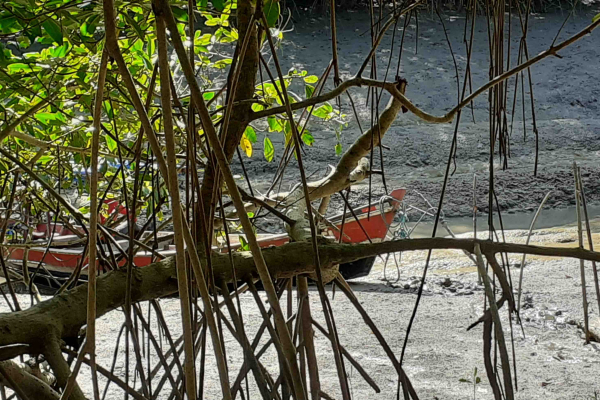
The third TROPECOS field work in mangroves of Marapanim Pará (19 Sep. 2025 – 3 Oct. 2025, involved 7 research scientists and students from BOREA, MPEG, UFF and UFPA. We measured gas fluxes in mangrove soils and waters, dissolved carbon concentrations and tidal exchanges, isotopic composition of dissolved inorganic carbon and methane, and litter fall. A world record of tidal variation of pCO2 in a mangrove tidal creek was obtained during equinox spring tides, with values lower than 900 ppmv at high tide and higher than 9 000 ppmv at low tide.  

Field work in mangroves of Mamangua and Itacoatiara, Rio de Janeiro, Brazil

The second TROPECOS field work in mangroves of Rio de Janeiro (Mamangua and Itacoatiara) 24 May 2025 – 7 June 2025, involved 14 TROPECOS research scientists and students from BOREA, LPG, UFF and UFPA. We measured gas fluxes in mangrove soils and waters, dissolved carbon concentrations and water current in tidal creeks, and high resolution dissolved redox species in sediments using 2D gels. 


PLUME 2 campaign in Mékong Delta, Vietnam

The second TROPECOS field work in Mékong Delta, 19-26 March, 2025, involved 3 research scientists, one post doc and one master student from IGE, CARE/HCMUT and CARRTEL. The four main branches of Mékong Delta were sampled along about 500 km in order to cover the entire salinity gradient from freshwaters to seawaters along the coast. This second campaign was realised in dry season and will allow to compare different land use in the different branches (paddy rice, aquaculture, urban area…)

Second Field work in mangroves of Marapanim and Salinas, Pará, Brazil

The second TROPECOS field work in mangroves of Pará (Marapanim and Salinas) 6 May 2025 - 28 May 2025, involved 11 TROPECOS research scientists and students from BOREA, LPG, MPEG, UFF and UFPA. We measured gas fluxes in mangrove soils and waters, dissolved carbon concentrations and water current in tidal creeks, and high resolution dissolved redox species in sediments using 2D gels. 

PLUME campaign in Saigon Dong Nai River and Mékong Delta, Vietnam

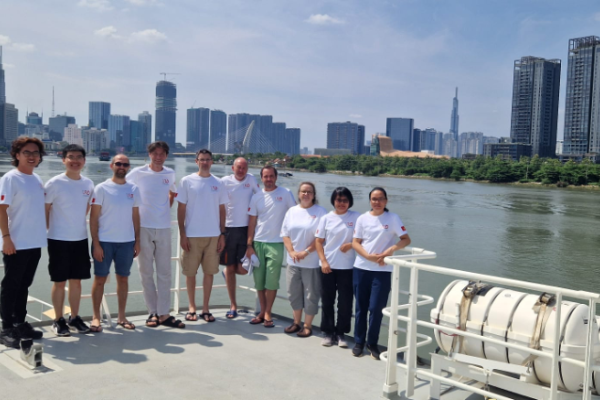
Five TROPECOS researchers from IGE and CARE/HCMUT have joined the Antea, a scientific vessel from the French ocean fleet which sailed for 1 month along the Vietnamese South coast (10 June – 10 July 2024). During the field trip in wet season, intensive sampling of water for dissolved and particulate carbone as well as CO2 and CH4 concentrations was realised within the Saigon Dong Nai estuary, in two branches of Mékong Delta and along the coast. For more information: https://plumevietnam.com/